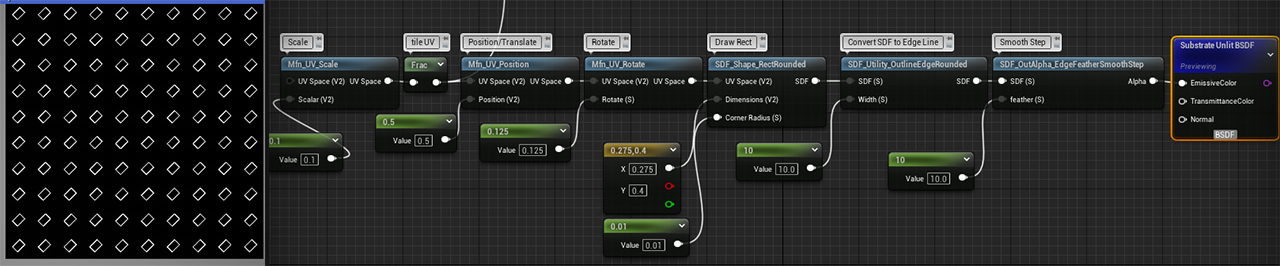
Journal: SDF
resources:
- https://joyrok.com/SDFs-Part-Two
- https://www.artstation.com/blogs/briz/mnRN/2d-sdf-basic-shapes-and-visualization-material-function-library-ue5
- https://iquilezles.org/articles/distfunctions2d/
- https://www.youtube.com/watch?v=O_BwLOstG94
- https://alekongame.com/morph/
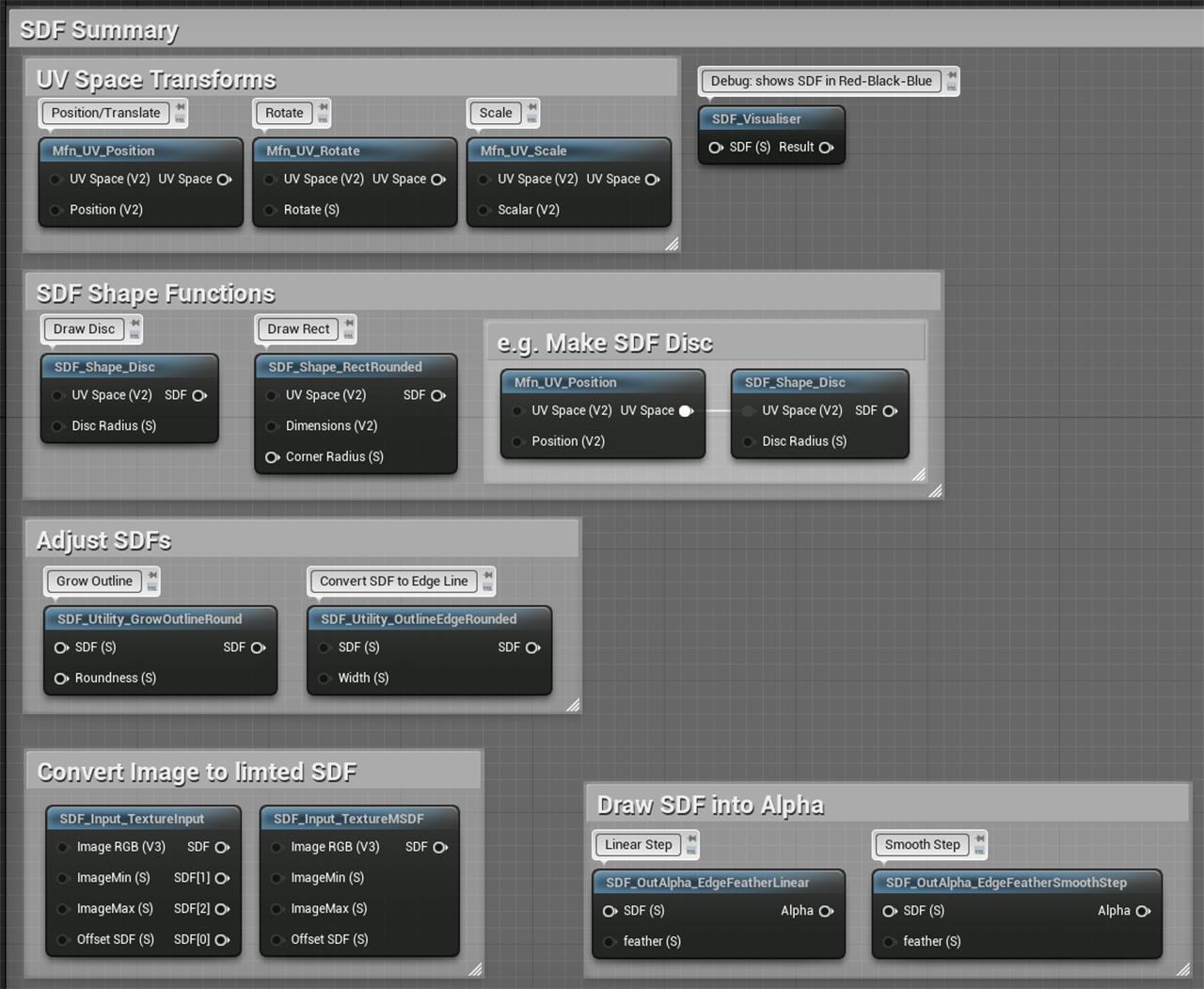
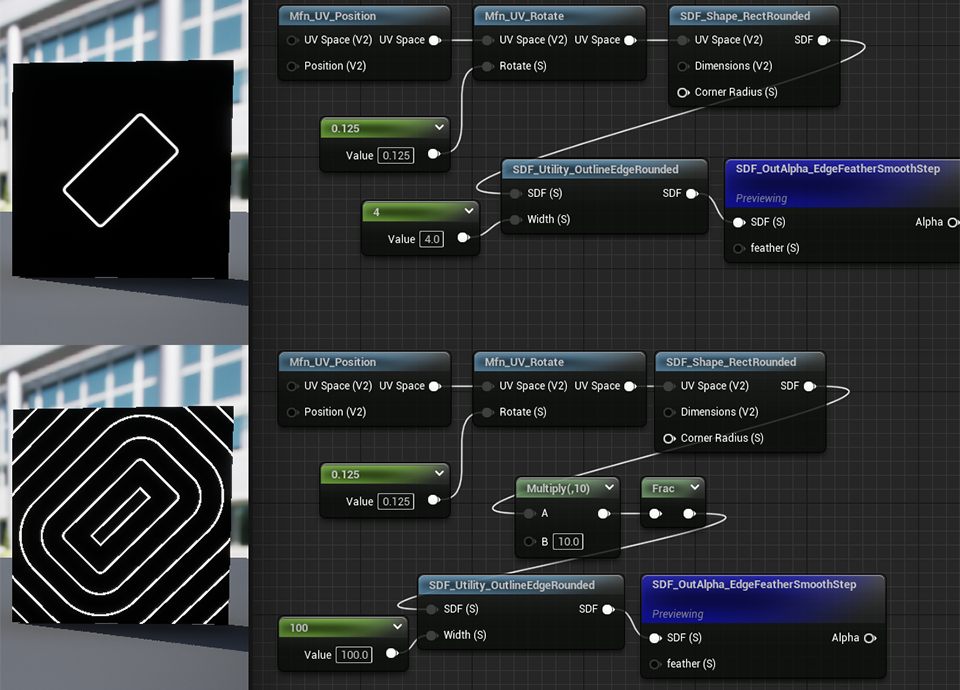
grouping of common subdivisions of functions
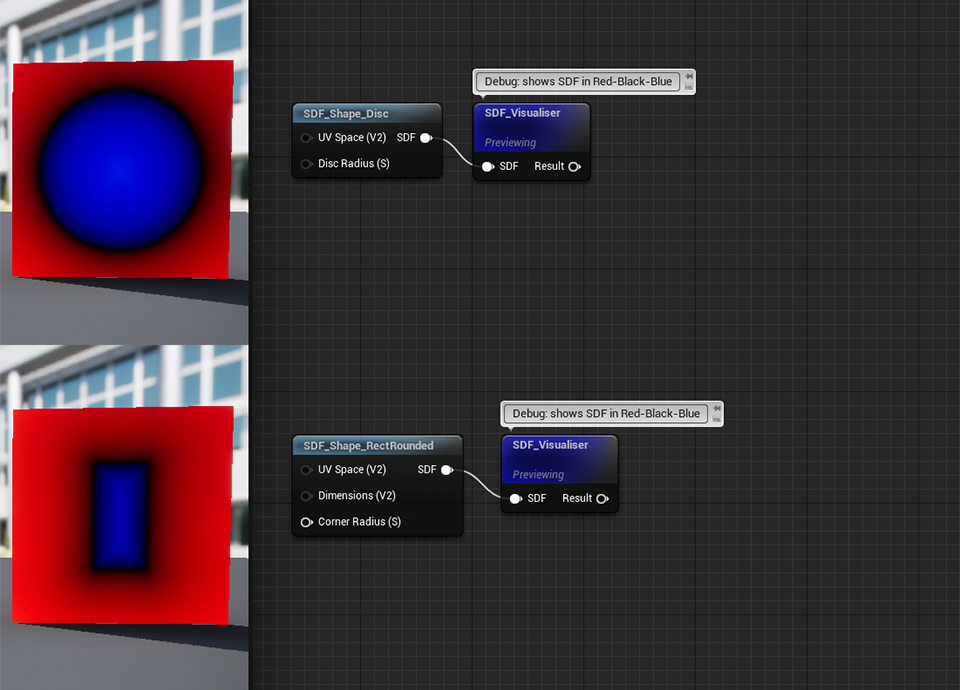
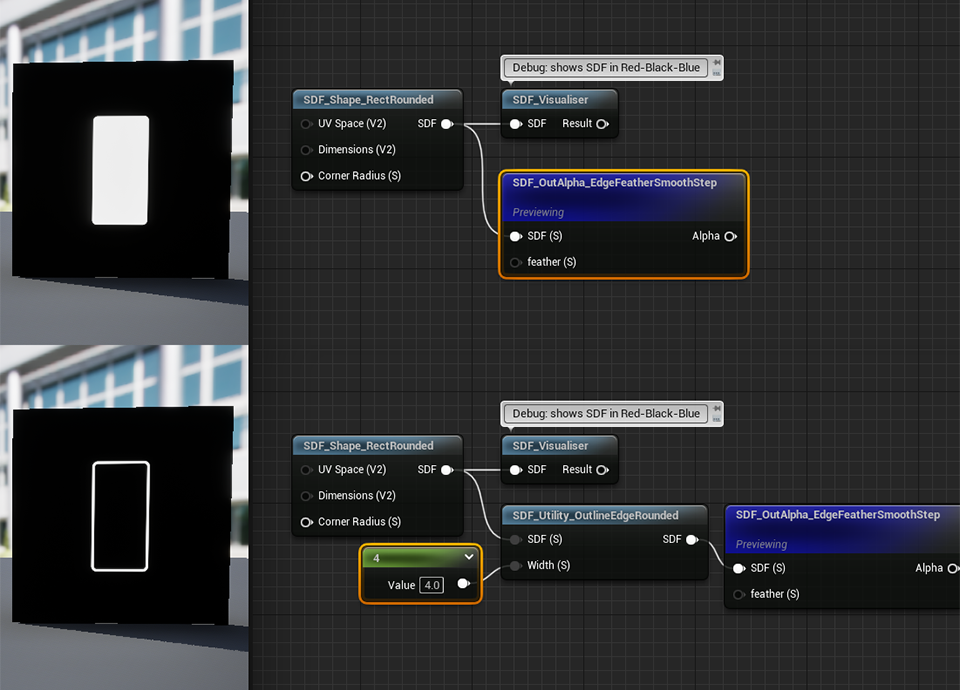
SDF to Normal Field
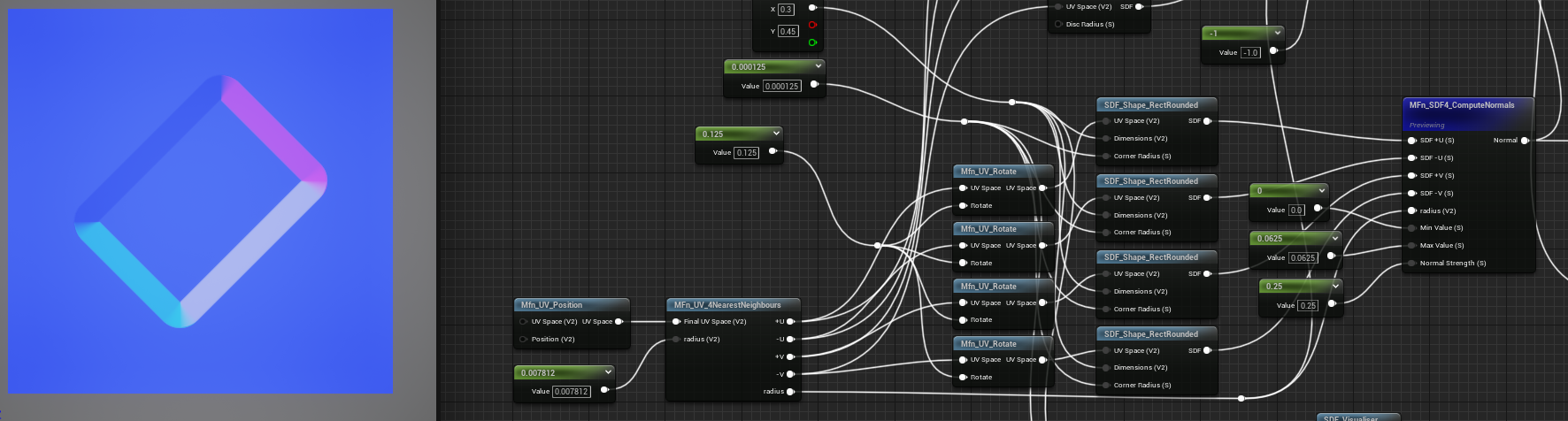
SDF to simplistic Normal vector field
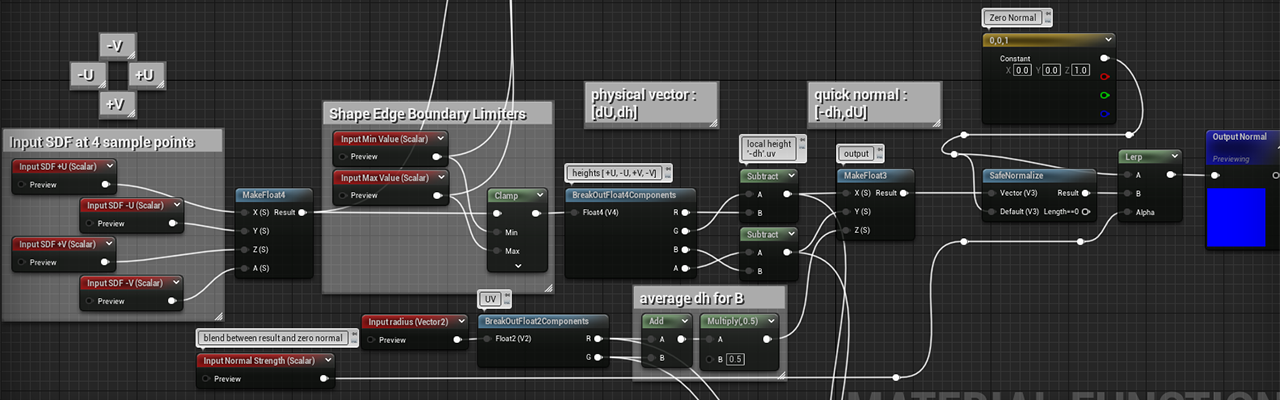
algorithm:
- get SDF values of 4 neighbours of center of sample point (+U, -U, +V, -V) offset by “radius”
- shift the UV spaces by that much, so 4 copies of the SDF function is needed (unfortunately)
- clamp those values (lower value for inside of shape/edge, upper value for outside of shape/edge)
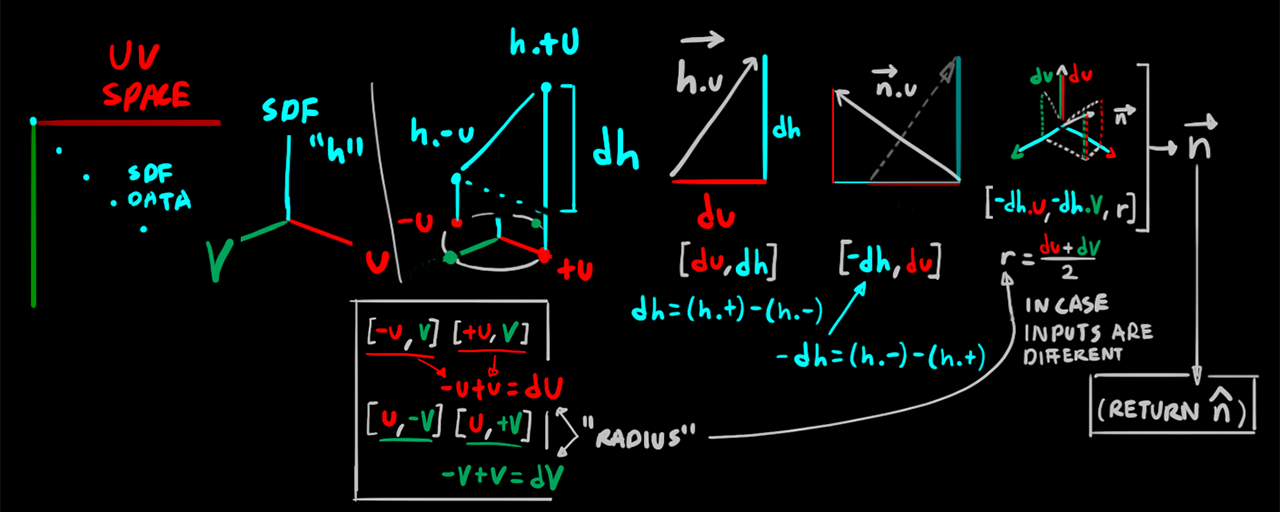
- maths:
- get negative “height” differences
(-U.SDF) - (+U.SDF) = dh.U,(-V.SDF) - (+V.SDF) = dh.V - get sample “radius”
+U-U = dU,+V-V = dV- radius = average of
dUanddV - in case both inputs are different, might simplify this since i can’t think of actual use of different sampling widths between U and V
- make
[-dH.U, -dh.V, radius], that’s the quick and dirty normal - normalise and pass to normal input of shader
- get negative “height” differences
potential issues:
- high
maxsampler count(about 400) - drawing an SDF shape function 4 more times to create the normal might make shader 5x as heavy, might be too much for complex compound SDF shapes
outtakes

bad normal result due to improper UV transforms (SDF normal facing the wrong way)
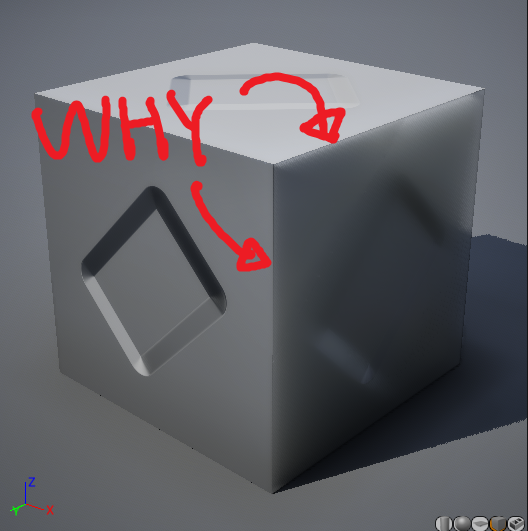
XY value mis-map due to XY being of range [0,1] when UE requires [-1,+1] (blurry side-facing faces)